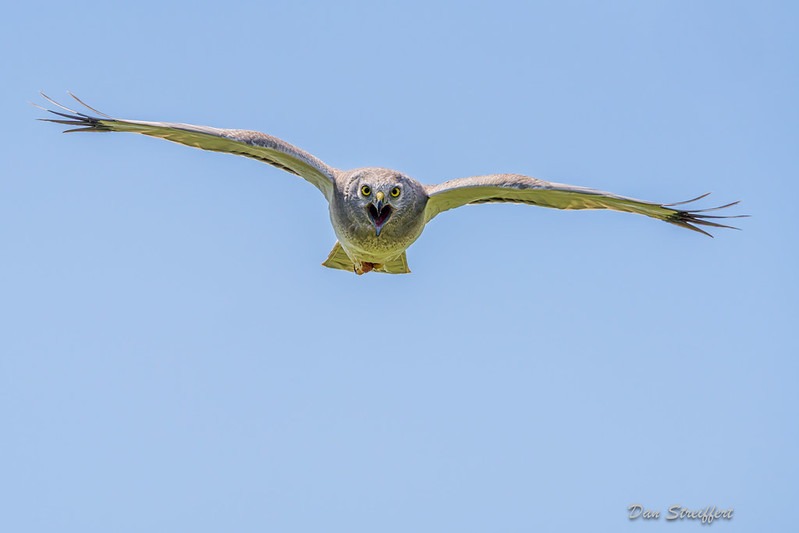
Northern Hairier
By Dan Streiffert

For best viewing, click the “Watch on YouTube”, then “more”
𝗪𝗵𝗮𝘁 𝘆𝗼𝘂’𝗿𝗲 𝘀𝗲𝗲𝗶𝗻𝗴
Rakiura is 24-years old and one of just 236 kākāpō alive today. This is the first breeding season for her critically threatened species since 2022. You’re looking at her underground nest.
𝗔𝗯𝗼𝘂𝘁 𝗞𝗮̄𝗸𝗮̄𝗽𝗼̄ 𝗖𝗮𝗺 Through this Kākāpō Cam, we hope to gain greater insight into female nesting behaviour. We also know very few people get the chance to see a kākāpō in real life. This is why we work hard to bring their stories to you, and Kākāpō Cam is an exciting way we can do that.
DOC’s Kākāpō Recovery Programme works together with Treaty Partner Ngāi Tahu, with support from National Partner Meridian Energy to support the recovery of this taonga species so they can one day thrive again across Aotearoa New Zealand. Learn more, or support through donation or symbolic adoption at kakaporecovery.org.nz
𝐅𝐀𝐐𝐬
How many eggs did Rakiura have? Three eggs this season – all were fertile but Rakiura-A1 was lost due to early embryo death. This is something we see often. Around half of all kākāpō eggs are fertile, and a quarter of those die as embryos. Overall, only about a third of all eggs laid become fledged chicks. Rakiura-A2 and Rakiura-A3 have been fostered to other mums.
Why does she not raise her own chicks? Many chicks are placed with foster mums. There are lots of factors we consider but hatch timing, genetic value, and a mum’s experience are the key drivers in deciding which nests chicks will be raised in. Because Rakiura is known as a great mum from previous seasons, she is a top candidate to raise chicks of high genetic value.
Why do you take in the fertile eggs? We take them in for safekeeping in incubators until they are due to hatch. We take this extra precaution on Whenua Hou, where mottled petrels (kōrure) and Cook’s petrels (tītī) can physically compete for the same burrows as nesting kākāpō, creating a high risk of eggs being damaged during fights or scuffles.
Will Rakiura leave the nest for food? Kākāpō are nocturnal so Rakiura will leave the nest for food when needed at night. As kākāpō chicks get older, their mums spend more time away from the nest getting food – sometimes hours at a time.
How many chicks will she raise? We aim to maintain all nests and give each mother the opportunity to raise at least one chick. It’s likely Rakiura will raise two chicks of high genetic value.
Who is the father of her own eggs? It could be Kōmaru, who mated naturally with Rakiura, or it could be one of the males from a mixed-sperm artificial insemination: Bluster Murphy, Moss or Gaupo. It is even possible that there could be a mix of fathers for this clutch. We will know later this year after genetic testing.
What happens to infertile eggs? This season one egg from each entirely infertile clutch will be used for ongoing research looking at microscopic fertility. The others will be kept for use as stand-in eggs on Whenua Hou, helping us further understand the risk to eggs from petrel disruption.
How long will she look after chicks for? Kākāpō typically hatched after one month. Once hatched, the chicks stay in or very close to the nest for about three months, relying entirely on mum for protection and food. After fledging (leaving the nest), they continue to depend on their mother for another three months or so, during which time she still feeds and looks after them until they begin to forage independently.
