

Hello, and welcome to my mewsings!
If you know me, you know I like to talk. My people ask me questions, and I almost always answer with an appropriate mew or meow. They must understand me because I always get what I want.
Well, I’ve learned that birds ‘talk’ too! Through songs, calls, chirps and tweets, birds send out alarms, declare territory, look for and attract mates, and greet the day.
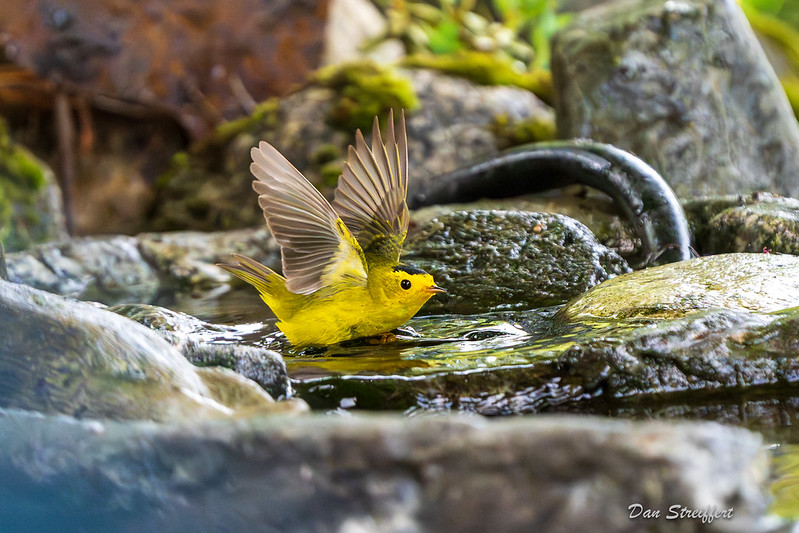
Bird song is most highly developed in a group of birds called passeriformes. Basically, this word means ‘perching bird’. Wrens, warblers, blackbirds and thrushes belong to this group, which is enormous. Around 5400 of the world’s 8 – 9,000 bird species are passeriformes, and all of them sing – differently.
Each species has its own signature song. Some are basic chiff-chaffs, but many are rich and complex. The Red-winged Blackbird and Swainson’s Thrush come to mind.
Each song is different because initially it has to identify the singer’s species. Then, the song has to say something about the health of the singer. A loud, loud song could indicate a strong, healthy bird. Other males upon hearing this robust outburst may choose to seek space and females elsewhere. In some species, a wide variety of sounds in a song is especially attractive to females.
Birdsong is part of the breeding cycle. Most birds sing in the breeding season, starting in January and stop in July. Increasing daylight during this time prompts birds to sing as more light sets off their hormones. In response, they sing.
Birds stop singing when molting begins. This makes sense, as a male wouldn’t want a female to see him when his feathers are falling out, and wouldn’t want to announce his presence to predators when he doesn’t have his usual strength and energy to escape.
Some birds like robins sing in the winter. This is to defend feeding territory, not for breeding. Interestingly, in winter female robins sing as well as the males.
Birdsong also coincides with a daily cycle. The most intense period is at first light, the ‘dawn chorus’. If a male bird had not been able to feed well the previous day, it may die during the night. It sings to announce, “I have survived because I am excellent at finding food and will be a good provider!”
Also, many females lay eggs at first light and after this are at their most fertile. Males need to fend off other potential mates, and they do this with song.
All in all, although a lot is known about birdsong, the study of it was quite new just ten years ago. It will be exciting to see what is discovered in the future about why birds sing.
Until next time,
Millie, the Muse of Mews